Key Takeaways
- Five signs can point to a retaining wall problem. Leaning, bulging, cracking, separating sections, and drainage problems are the warning signs; two or more together usually means the issue is structural, not cosmetic.
- Poor drainage is a common cause. Water trapped behind the wall, made worse by Pittsburgh freeze-thaw cycles, is what causes most leaning and bulging.
- Active movement near people or traffic is a safety issue. A wall shifting next to a driveway, steps, or the house is not something you put off.
- Catching it early can keep repair costs down. A drainage fix or localized repair caught early beats a full rebuild after the wall gives way.
- Fix the cause, not just the visible damage. Pushing a wall back or mortaring over a crack will not hold if the water and soil pressure behind it are not corrected.
You may first notice the problem while backing out of the driveway or walking around your property. The retaining wall that used to look straight suddenly seems a little off.
Maybe the top is tipping forward; a few block courses have shifted, or there’s a damp strip of soil that never really dries. Some changes may be minor, while others can point to a problem developing behind the wall.
On Pittsburgh hillsides, retaining walls must handle soil pressure, runoff, and repeated freeze-thaw cycles. The good news is that many retaining wall problems show warning signs before the damage becomes more serious. Here are five signs to watch for, what they can mean, and when it’s time to have your retaining wall looked at.
1. The Wall Is Leaning or Tilting Outward
A leaning retaining wall is no longer plumb. The top may rotate away from the slope, or the whole face may look like it’s tipping toward the driveway, yard, sidewalk, or patio below.
On Pittsburgh lots, leaning usually is a result of pressure building behind the wall. Saturated soil gets heavier; runoff pushes against the back of the wall, and freeze-thaw cycles keep opening small gaps. If the base was undersized, the wall was built too tall without the right reinforcement, or the drainage never worked well in the first place; you may start to see movement near the top of the wall.
A slight lean in an older landscape wall doesn’t always mean there’s an immediate problem, but any new or ongoing movement should be taken seriously. If the lean has changed recently, blocks are starting to shift, or if the wall sits near a driveway, walkway, steps, or your house, have it inspected before the area becomes a safety concern.
2. The Face Is Bulging or Bowing
A bulging retaining wall can be harder to spot than a leaning one, because the top may still look straight. Stand back and look along the face. If the middle bows outward, or a section of block looks pushed forward compared with the courses above and below it, there may be excess pressure behind that section.
A bulge often points to pressure from water or soil behind the wall, not just a surface defect. Water can collect behind the wall, soil can settle unevenly, and missing geogrid, weak reinforcement, poor gravel backfills, or clogged drainage can allow the center of the wall to move while the ends stay in place. Don’t try to push a bulging wall back into place or hide the movement with mortar. The problem causing the bow is behind the wall. Retaining wall repair may involve drainage correction, regrading, resetting sections, reinforcement, or rebuilding part of the wall. The right repair depends on what is happening behind the face.
3. Cracks Are Spreading Through Block, Mortar, Stone, or Concrete
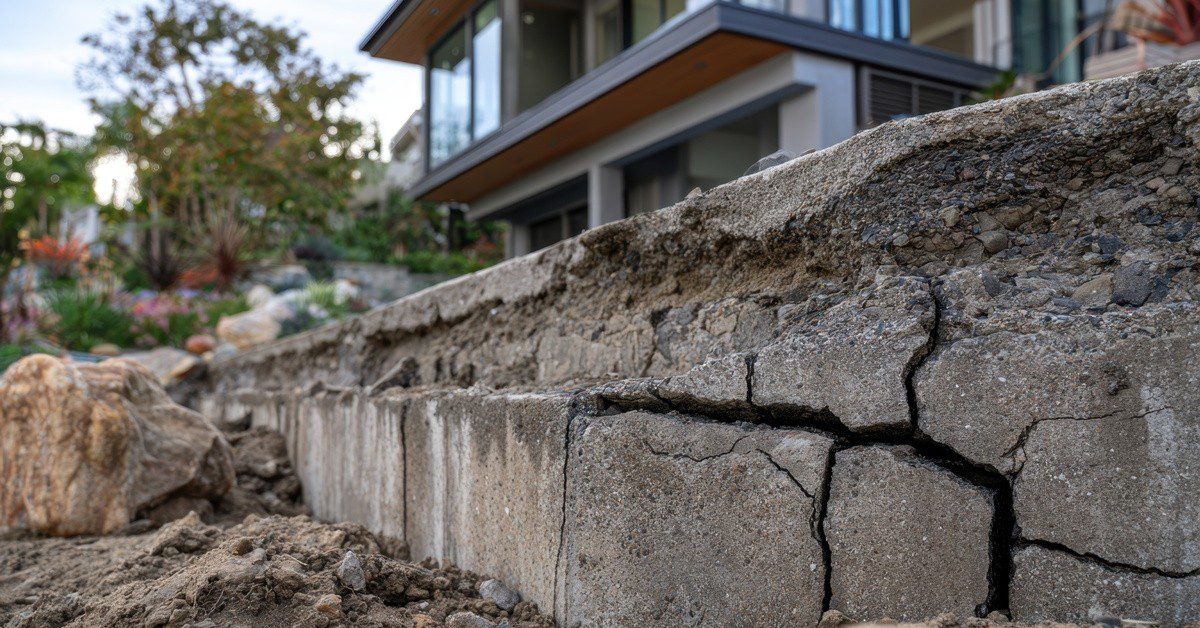
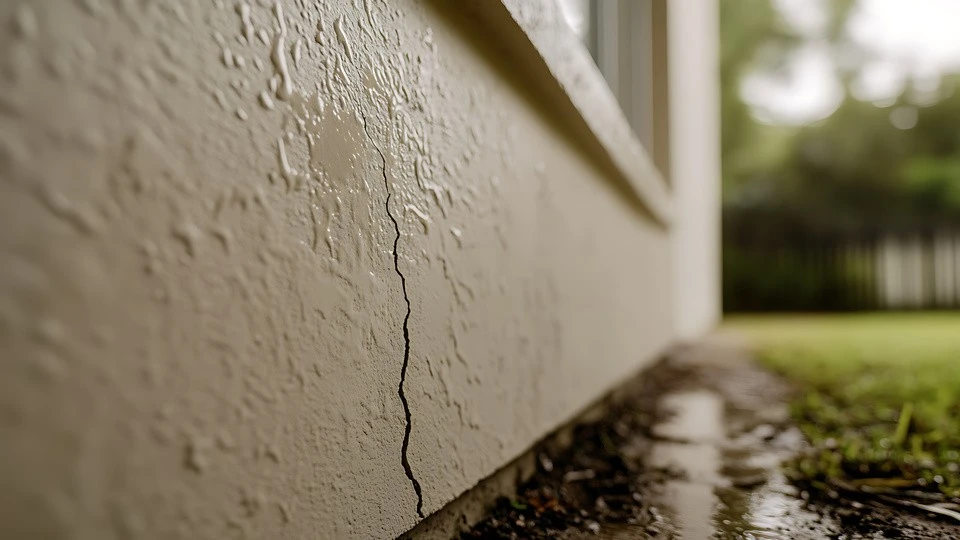
Not every crack point to a serious problem. Hairline cracks in poured concrete or small surface cracks in mortar can be cosmetic, especially if they aren’t getting wider, and there are no other signs of movement. The pattern often tells you more than the crack alone.
Watch for stair-step cracks through block or masonry joints, horizontal cracks in poured concrete, vertical cracks that keep widening, or cracks paired with leaning, bowing, or separation. In brick, block, and stone walls, cracking often follows the joints due to the wall’s tendency to move along its weakest lines. In poured concrete, horizontal cracking can point to pressure across the face of the wall.
4. Blocks, Corners, or Attached Sections Are Separating
Separation can show up as gaps where the wall used to be tight. You might see block courses sliding out of alignment, corners opening, cap blocks shifting, or the wall pulling away from adjoining steps, a driveway edge, a patio, or another structure.
This type of shifting is a sign to take seriously because it points to movement within the wall, not just wear on the surface. The wall may be losing support at the base; the backfill may be washing out, or one section may be carrying more load than the rest.
Pay close attention to separation near steps or walkways. A wall that shifts next to a route people use every day is a practical safety concern. If a block moves by hand, if the gap is getting wider, or if the wall is shifting near a high-traffic area, it’s time to have it inspected.
5. Drainage Problems Are Showing on or Around the Wall
In our experience, drainage problems are often behind the leaning, bulging, cracking, and shifting homeowners’ notice in retaining walls. And sometimes, the drainage warning signs show up before the wall itself starts to move.
You may notice water seeping through joints, pooling behind the wall, or leaving soil around it soggy long after a rain. Other signs include soil washing through gaps, erosion below the wall, or white mineral staining called efflorescence. Clogged weep holes, missing drain tile, poor gravel backfill, and surface runoff directed toward the wall to all trap water where it should be draining away.
Water naturally moves downhill, which makes proper drainage especially important for retaining walls on a slope. Without a working drainage system, water can be collected behind the wall and increase the pressure against it. Pittsburgh’s freeze-thaw cycles add another concern, as trapped water can freeze and expand in cracks, joints, and pockets of soil. For a closer look at how our local climate affects concrete, see our guide to how Pittsburgh weather affects concrete.
Repair or Rebuild Depends on the Cause
Whether a retaining wall can be repaired depends on what caused it to move and how much damage has already occurred. If the underlying problem can be corrected and the wall is still structurally sound, a repair may be enough. More extensive movement or damage may require rebuilding part of the wall.
Localized cracking, a small, shifted cap, or a drainage issue caught early may be repairable. A wall with active leaning, a deep bulge, widespread separation, or soil washing behind several sections may need partial or full rebuilding. If the original wall was too tall for its design or is missing the reinforcement it needs, a surface repair won’t solve the underlying load problem.
| Condition | Likely Direction |
|---|---|
| Minor cracks with no movement | May be monitored or repaired locally |
| Drainage issue with limited wall displacement | May involve drainage correction and targeted repair |
| Bulging or leaning with active movement | Often requires deeper structural evaluation |
| Large sections shifting or separating | May require rebuilding affected sections |
Cost depends on access, wall material, drainage work, grading, and whether equipment can reach the area. Permit and code requirements may come into play depending on wall height, location, and whether the project is a repair or a rebuild. Some of these questions simply can’t be answered without seeing the wall and the surrounding property in person.
What You Can Check Before Calling a Contractor
You don’t need to dig behind the wall or pull blocks to get a better idea of what’s going on. Taking apart a wall that’s already moving can actually make the area less stable. Instead, start with a simple visual check of the wall and the area around it:
- Stand at one end and sight down the wall face for bowing.
- Look at the top line for tilt or rotation.
- Check whether block courses still line up.
- Look for stair-step cracks, widening joints, or separated corners.
- Note where water pools, seeps, or leaves soil stains.
- Take photos after heavy rain, so changes are easier to compare.
If the wall sits near a house, driveway, walkway, steps, or play area, take any signs of movement seriously. A shifting wall in an area people use regularly can quickly become a safety concern.
Have the Wall Inspected Before the Damage Spreads
If you see leaning, bulging, shifting sections, or signs of drainage problems, it’s worth having the wall looked at before the damage gets worse. A Cirello Contracting, we’ve been working as a Pittsburgh contractor since 1980, and we understand what local slopes, drainage, and freeze-thaw conditions can mean for a retaining wall.
You can learn more about how we approach repairs and rebuilds on our Pittsburgh retaining wall repair page. If your wall has already started to move or you’re seeing water build up behind it, request a free estimate. We can take a look at the wall, figure out what’s causing the problem, and determine what it will take to fix it.
Frequently Asked Questions
Is a leaning retaining wall dangerous?
A leaning wall can be a safety issue when the movement is active, or the wall sits near a driveway, walkway, stairs, or the house. A small lean that has not changed may be stable for now, but a wall that is tipping more over time needs a closer look before it gives way or starts shedding material.
Can a bulging retaining wall be repaired, or does it need to be rebuilt?
It depends on what is causing the bulge and how far the wall has moved. If the problem is limited and the base is still sound, repair may be possible, but a wall that is bowing because of pressure behind it often needs drainage work, reinforcement, or partial rebuilding.
What are the most common signs a retaining wall is failing?
The clearest signs are leaning, bulging, cracking, separation between sections, and drainage problems like seepage or soil washout. A wall can show more than one of these at the same time, which usually means the problem is structural rather than just cosmetic.
How do I know if my retaining wall needs repair or replacement?
Repair is more likely when the damage is localized, such as a small crack, a shifted cap, or a drainage issue caught early. Replacement becomes more likely when several sections are moving, the wall is losing its shape, or the original build does not have enough support for the load it’s holding back.
What should I look for if I need retaining wall repair near me?
Look for a contractor who checks the wall face, the base, drainage, and the slope behind it, not just the visible cracks. On Pittsburgh hillsides, the wall has to handle water and soil pressure at the same time, so the inspection should account for grading, runoff, and any movement around nearby structures.
Can I ignore small cracks in a retaining wall if nothing has shifted yet?
Small cracks can be harmless, but they’re worth watching if they start widening, repeat after wet weather, or appear with seepage or slight movement. The safest approach is to photograph them, check whether they change after storms, and call for an inspection if the pattern gets worse.