Key Takeaways
- Budget a wide range, not a single number. In Pittsburgh, a poured concrete driveway commonly runs about $25 to $35 per square foot installed, but site conditions swing the total more than square footage does.
- What is under the slab drives durability. A compacted stone sub-base, 4–6 inch thickness, air-entrained concrete, reinforcement, and planned joints are what let a driveway survive Western PA freeze-thaw winters.
- Pittsburgh terrain adds cost. Hillside access, long pours or pumping, tear-out of the old driveway, and slope drainage all raise the price versus a flat suburban lot.
- Compare scope, not just price. A cheaper bid is often cheaper because it skips removal, base prep, or drainage, so ask what each estimate actually includes.
- Do not cut the buried work to save money. Simplify the finish or the shape instead; skimping on base, thickness, or drainage shows up as cracking and heaving after the first winters.
You get two concrete driveway quotes in Pittsburgh for what looks like the same job, and one is thousands higher. The gap usually comes down to the parts you can’t see in a photo: tear-out and haul-away, excavation, a properly compacted stone sub-base, slab thickness, reinforcement, drainage on a slope, and whether the crew can even get concrete to the pour without a long wheelbarrow run or a pump. That’s why a national average only gets you so far. Broad 2026 market ranges put installed concrete driveways around $25 to $35 per square foot, and many two-car driveways land somewhere between about $7,500 and $14,000 depending on finish and site conditions.
Pittsburgh adds its own realities on top of that. Freeze-thaw winters, steep grades, and tight access on older city lots can move the number fast. This guide gives you a realistic Pittsburgh budgeting range first, then breaks down the local job conditions and builds specs that usually decide whether your driveway lands at the low end or the high end.
Typical 2026 Concrete Driveway Cost in Pittsburgh
For early budgeting, a broad installed range of about $25 to $35 per square foot works for most poured concrete driveways, with basic flatwork near the lower end and decorative, sloped, or access-heavy projects moving higher.
Those are planning ranges, not exact prices. Every driveway is quoted individually after we look at size, removal, grade, drainage, access, reinforcement, and finish. If you want a project-specific number, request a free estimate.
| Driveway size | Common square footage | Planning range at $25–$35 per sq ft | What can move it higher |
|---|---|---|---|
| Single-car driveway | About 300–400 sq ft | About $7,500–$14,000 | Tear-out, narrow access, slope, thicker slab, decorative finish |
| Two-car driveway | About 600–700 sq ft | About $15,000–$24,500 | Drainage work, apron work, reinforcement, regrading |
| Large or extended driveway | About 800–1,200 sq ft | About $20,000–$42,000 | Turnarounds, curves, long pours, retaining wall or excavation needs |
An average only helps if your project is average. A flat suburban replacement in Bethel Park or Monroeville can price very differently than a narrow hillside driveway in Lawrenceville, Greenfield, Mount Washington, or the South Hills.
Why Square Foot Pricing Only Starts the Conversation
A per-square-foot number is useful for checking whether a quote is in the right universe. It won’t tell you whether two bids include the same work. One bid might cover demolition, hauling, compacted stone, reinforcement, jointing, drainage correction, and cleanup. Another is a lump sum with almost no detail.
So, before you compare the final numbers, ask what each one includes. A cheaper bid can be lower simply because the scope is smaller, the prep is thinner, or the drainage problem got left for later.
- Square footage sets the base volume of concrete and labor.
- Shape changes forming time, especially with curves, flares, and turnarounds.
- Thickness affects concrete volume and prep requirements.
- Removal adds labor, equipment, hauling, and disposal.
- Finish changes in the finishing process and crew timing.
- Drainage and grade can add excavation, stone, drains, or regrading.
- Access affects how concrete reaches the forms.
The Pittsburgh Specs That Belong in the Budget
A Pittsburgh driveway has to deal with wet seasons, winter freeze-thaw cycles, and swings in temperature. The finished surface is only one part of the job. What’s built under the slab controls how well the driveway holds up after a few winters.
Compacted Stone Sub-Base
A proper stone sub-base gives the slab uniform support and helps move water away from under the concrete. If the base is soft, uneven, or poorly compacted, the slab can settle, crack, or heave. On replacement work, the old driveway can hide weak spots that only show up once it’s torn out.
That’s why excavation and site prep can be a real cost driver. Removing bad material, bringing in stone, and compacting it in lifts takes time, equipment, and room to work.
Thickness, Reinforcement, and Mix Design
Many residential driveways use a 4-inch slab for normal passenger vehicles, while heavier use or weak site conditions call for 6 inches or thickened edges. Reinforcement can be rebar, wire mesh, or fiber, depending on the design and the contractor’s spec. It doesn’t replace a good base, but it helps the slab perform under vehicle loads and seasonal movement.
For exterior concrete in Western PA, air-entrained concrete is standard because it handles freeze-thaw exposure better. Control joints and expansion joints have to be planned too, not guessed after the pour. A good joint layout gives the concrete a controlled place to move and crack as it cures and expands. For more on local weather exposure, see how Pittsburgh weather affects concrete.
Replacement Costs: Tear-Out Changes the Job
Pouring a new driveway on a prepared stone base is a different project than replacing an old concrete or asphalt one. Replacement usually means breaking up the existing surface, loading the debris, hauling it away, checking the subgrade, fixing low or soft areas, rebuilding the base, then forming and pouring the new slab.
Old driveways can also hide drainage problems. If water has been running under the slab or toward the garage for years, a straight replacement just repeats the same failure. In that case, the redo may need to regrade, a drain, or a different slope before any new concrete goes down.
When you’re pricing a replacement or a redo, it helps to separate these items in your head:
- Demolition of the existing driveway
- Haul-away and disposal
- Excavation or subgrade repair
- Stone base and compaction
- New forms, reinforcement, concrete, finishing, and joints
- Cleanup and restoration around the work area
Hillsides, Drainage, and Tight Access in Pittsburgh
Pittsburgh isn’t built like a flat subdivision. Plenty of homes sit on hillsides, tight urban streets, narrow alleys, stepped yards, or driveways that climb toward the house. Those conditions change labor hours and equipment needs.
If the concrete truck can’t get close to the forms, the crew may need longer wheelbarrow runs, buggy placement, or a pump. If the driveway is steep, forming and finishing take more care. And if water runs down the driveway toward the house, drainage work has to happen before the pour.
Drainage might mean adjusting the slope, adding a channel or French drain, correcting the apron, or regrading the soil nearby. On steeper properties, grade changes sometimes touch nearby walls, steps, or landscape structures. When a slope needs structural support, retaining walls can become part of the larger plan.
Finish Choices and Their Budget Impact
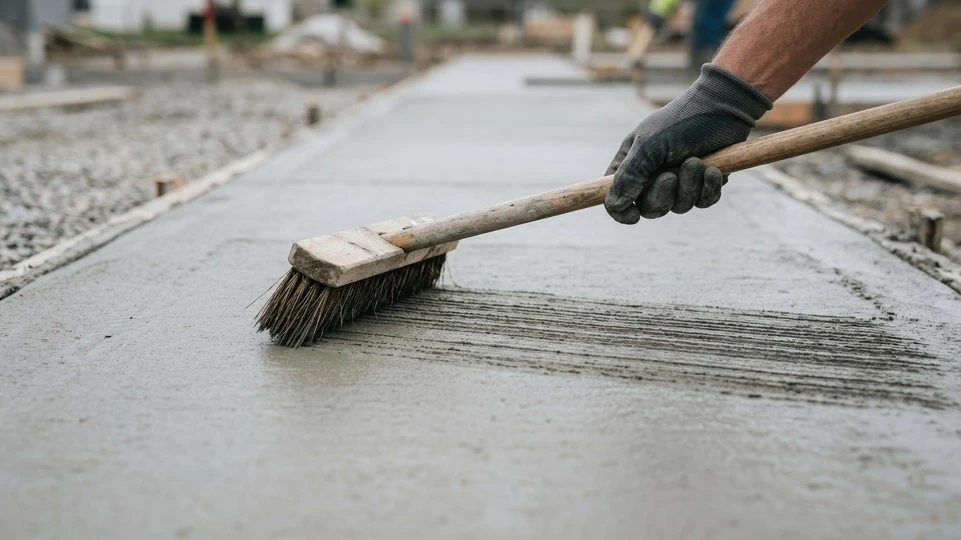
The finish affects both appearance and labor. A standard broom finish is usually the practical choice for traction and budget control. Decorative finishes add color, texture, pattern, or exposed stone, but they also mean more setup, finishing time, and detail work.
| Finish type | What it gives you | Budget effect | Best fit |
|---|---|---|---|
| Broom finish | Clean, textured gray surface | Lowest typical finish cost | Driveways where function and traction come first |
| Colored concrete | Integral or surface color | Adds material and finishing cost | Homes where the driveway needs to match other hardscape |
| Stamped concrete | Patterned surface resembling stone, brick, or pavers | Higher labor and detail cost | Decorative front entries or premium curb appeal |
| Exposed aggregate | Decorative stone texture at the surface | Higher finishing complexity | Driveways where texture and visual detail are desired |
If you want decorative concrete without blowing up the budget, use it in a border, apron, or entry area instead of across the whole driveway. For design ideas, compare stamped concrete finishes and exposed aggregate vs. stamped concrete.
Repair, Resurface, Seal, or Replace?
Not every driveway needs full replacement. Sealing protects a driveway that’s still structurally sound. Resurfacing improves the surface when the base slab is stable, and the damage is shallow. Repairs handle isolated cracks, corners, or small damaged areas.
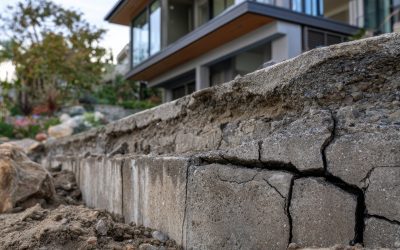
Those options don’t solve every problem. If the slab is heaving, settling, badly cracked, draining toward the house, or breaking up because the base failed, a surface fix only covers the symptom. A contractor should look at where the cracks are, whether sections have moved, how water drains, and whether the old slab still has enough support underneath it.
When you’re deciding between repair and replacement, the useful question isn’t just “what’s cheaper today?” It’s “will this scope actually solve the reason the driveway failed?”
Concrete vs Asphalt Cost
Concrete usually costs more upfront than asphalt, but a properly built concrete driveway lasts longer and has a different maintenance profile. The right call depends on budget, appearance, drainage, slope, and how long you plan to stay in the home. For a focused breakdown, read our concrete vs. asphalt driveway comparison.
Lifespan, Maintenance, and Home Value
A properly built concrete driveway in Pittsburgh commonly lasts 25–30+ years, depending on base prep, drainage, use, maintenance, and winter exposure. Heavy trucks, deicing salts, poor runoff control, and neglected cracks all shorten that.
Maintenance is straightforward:
- Keep the surface clean
- Manage runoff
- Go easy on harsh chemicals
- Seal when the finish calls for it
- Fix small cracks before water keeps getting into them. In winter, water that gets into a crack and freezes will widen the damage over time.
A clean, well-built driveway helps curb appeal and makes a property feel better maintained. For buyers, a driveway that drains correctly and doesn’t show major settlement takes one visible worry off the table. That value is strongest when the driveway looks good and performs well, not just when it’s new.
Get a Driveway Number Based on Your Actual Site
Online ranges are fine for planning, but your real cost comes down to the driveway in front of the house: the old surface, the slope, the base, the water, the access, and the finish you want. A site visit turns a rough square-foot guess into a real scope of work.
If you’re budgeting for a new driveway in Pittsburgh, replacing cracked concrete, or comparing bids that don’t line up, Ciriello Contracting can look at the site conditions and walk through the options with you. Request a free estimate and get a Pittsburgh-specific number for your project.
Frequently Asked Questions
How much does a concrete driveway cost per square foot in Pittsburgh?
For budgeting, many Pittsburgh driveway projects land somewhere in the broad installed range of about $25 to $35 per square foot. The lower end usually fits simpler, flat, broom-finish work, while sloped sites, removal, drainage correction, or decorative finishes push the price higher. A site visit is the only way to turn that range into a real project number.
What is the average cost of a concrete driveway for a two-car home?
A standard two-car concrete driveway often falls in the rough planning range of about $15,000 to $24,500, depending on square footage and site conditions. A simple flat driveway with easy access can stay closer to the middle or lower end, while tear-out, steep grades, or heavier reinforcement move the price up. The exact total depends on the scope, not just the driveway size.
What affects concrete driveway installation cost the most?
The biggest cost drivers are removal of the old driveway, excavation, base prep, drainage, access, finish choice, and reinforcement. In Pittsburgh, slope and freeze-thaw exposure also matter because they change how much prep and slab spec the job needs. Two driveways with the same square footage can price very differently if one is a simple flat pour, and the other needs grading and haul-away.
How much does it cost to replace an existing concrete driveway?
Replacement usually costs more than a new pour on a clean site because the old slab has to be broken up, hauled away, and replaced with a new base before the new concrete goes in. If the subgrade is damaged or the drainage is wrong, the project may also need extra excavation or regrading. That is why a replacement estimate should be based on an on-site look instead of a square-foot shortcut.
Does a stamped or decorative finish raise concrete driveway cost a lot?
Yes. Stamped, colored, and exposed aggregate finishes usually cost more than a standard broom finish because they take more labor, timing, and detail work. They can be a good fit if the driveway is part of the front entry and curb appeal matters, but they are usually the first place to simplify if the budget is tight.